A little rant to end the year.
Back in September 2016, I wrote a silly little poem in protest at the way the CEO of a certain nationally famous pub chain used his influence, and his company’s money, to generate pro-Brexit propaganda which was circulated amongst patrons of his pubs in the run-up to the referendum on leaving the EU. I subsequently posted the poem on my blog page on Write Out Loud, to receive the unexpected accolade of being voted Poem of the Week.
There was nothing solemn or pretentious in the aforementioned Silly Little Poem (which you can read, in all its glory, here). It was a skit – a pastiche – deliberately written in the metre most famously used by Dr Seuss in his comic rhymes for young readers. It was written to let off steam, and maybe raise a laugh. I wouldn’t ever have entered it for the Bridport Prize, or submitted it to a highbrow poetry journal. It’s not that sort of a poem.
I’ve re-posted links to the poem a few times since September 2016, when the pub chain which inspired it has cropped up in Facebook discussions. Most of the time it is received with the sort of droll amusement I hoped it would evoke. But not recently. The last time I mentioned it, a certain poet and Editor of a Respected Online Poetry Journal pounced upon the link and publicly denounced me for choosing to express my ire in the form of a Silly Little Poem. The poem itself came in for some Serious Critique for its “trite rhymes” and childish metre, and I was made to feel somehow kind of sordid for besmirching the good name of poetry by making a political point in such a light-hearted way.
And you know what? This made me angry.
OK, I should have guessed that my post would be read by some Serious Poets. The correspondent to whom I sent the link was a Facebook friend who is himself a Serious Poet of some distinction. He is however someone who has similar political sensibilities to me, and someone whom I know to be not averse to a bit of satire (and to be able to take it in the spirit with which it was intended). I suspected my contribution would raise a smile. I didn’t suspect that the Poetry Police would be scrutinising every word of his Facebook feed for signs of anything that could be seen to suggest that poetry is ever anything other than a Serious Artform. I certainly didn’t expect the sneering, the self-righteousness or the arrogance of the response with which my light-hearted little contribution was met.
In fairness to my friend, I should point out that he was not the source of the response. It came from somebody who followed his page – someone whose name is well known online in the poetry world, and who in my humble opinion really needs to get over himself.
First of all, who gets to dictate what does, and doesn’t, constitute suitable material for poetry? Political points don’t have to be made exclusively through serious poems – in fact, as I’ve argued before on this blog, sometimes the silly poem is more effective by virtue of being memorable for its daft rhymes, or for a refrain that gets lodged in the mind. After all, the satirist’s job is to make the self-important look ridiculous. The poems in Lewis Carroll’s Alice books were social and political satires; often they were pastiches of poems and songs of the day, or of well-known poetic styles; they were all very silly. And today they are fondly remembered, they are proudly recited by young and old alike, and some of them even feature in The Nation’s Favourite Poems. Now I’m not saying that my Silly Little Poem has anything to commend it to the extent that Jabberwocky does, but that’s not the point. The point is that you simply can’t say, with any justification, that serious political points can’t be made through light verse. A whole tradition of British poetic writing that encompasses Carroll, Lear, Betjeman, Auden, Roger McGough, John Cooper Clarke, Attila the Stockbroker and Les Barker will prove you wrong.
Secondly, there’s that sniffy assumption often made by Serious Poets, that writers of light verse somehow don’t take their craft seriously. I beg to differ with m’learned friend when he says that the rhymes in my Silly Little Poem are “trite”. I worked bloody hard at those rhymes – and though I say so myself, I think they are effective. The “Dr Seuss” metre requires them to be deployed with the subtlety of a rhinoceros driving a Sherman tank, but that doesn’t mean they are bad rhymes. One of the reasons I love writing Silly Little Poems is that they really make me work at rhyme, scansion and the musicality of a poem; they are great training for the moments when I get the urge and the inspiration to write Serious Poetry. As I’ve blogged before, it takes a great deal of skill to make light verse actually sound light – more than most Serious Free Verse Poets realise.
(Again, read the poem and judge for yourselves. I don’t make any claims as to its literary greatness; I just happen to think I came up with half-decent rhymes that work moderately well).
Lastly, I think I’m just sore at the fellow’s implication that somehow, by writing this stuff, I’m Not a Proper Poet. OK, so it would appear I’m never going to be published in his journal – I think we can be quite Clear about that, can’t we? – but I’ve published a whole collection of (mostly) serious poems and I’ve won 10 First Prizes in UK-wide and international poetry competitions – mostly with serious poems. I shouldn’t have to justify myself. I’ll be a poet in whatever medium I choose, thank you very much. If I choose to write Silly Little Poems, by all means judge the poems, but not the poet. If my output really isn’t for you, then fine – there are plenty of Serious Poets (and some silly ones) whose work I can’t stomach either. But the point is that those words speak to someone. Who are you to silence those words, just because that someone doesn’t happen to be you?
Showing posts with label Write Out Loud. Show all posts
Sunday, 31 December 2017
Tuesday, 23 February 2016
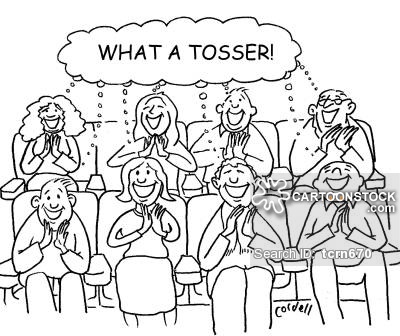
Clap clinic...
Yonks ago, I remember a poet at a performance explaining that you can classify a poem by the kind of onomatopoeia it elicits. There are “ooh” poems. There are “aah” poems. There are “oh!” poems. There are “hmmm...” poems. There are “fffff” poems. There are “ouch” poems. And occasionally there are “ha!” poems too.
Every one of these responses, in its own way, is a sign that a poem has succeeded. In some poetry readings you can gauge the impact of a poem by the volume of the wordless response from around the audience. It’s most obvious with the ‘instant impact’ poems, which tend to be in the “ooh”, “ha!” or “ouch” categories. But sometimes a particularly good poem needs an appreciative silence, to allow the impact of the words to sink in. A “hmmm” poem can become an “oh!” poem as understanding dawns on the listener. A love poem (usually an “aah”) may have a sting in the subtext, turning it into an “oh!” or even a “fffff”. Two of the First Prize poems I’ve chosen from competitions I’ve judged (Kate Rhodes’ The Movement of Bees and Joanna Ezekiel’s Homecoming, if you’re interested) fall very much into this category – I’ve heard Joanna perform the latter, and heard the audience making exactly those responses. And it’s one of the joys of a good poetry reading, to allow the poems space to take root in the consciousness of the audience, to allow the responses to unfurl in exactly this way.
There are many ways to show appreciation for a good poem. The evocative onomatopoeia may well be the highest compliment a poem can elicit. An appreciative (or even a shocked) silence can be another. And so can a round of applause.
But here’s the thing. A round of applause may be entirely appropriate for a “ha!" poem, or an “ouch” poem. And let’s face it, performing poets love the adulation. But what may be entirely appropriate for a “ha!” poem may be exactly the wrong response to the more subtle piece of poetry – the “hmmm” poem that needs space, and perhaps needs silence too, to sink in. There may even be a risk that a premature round of applause can shatter a carefully woven atmosphere, detract from the substance of the poem, and rob the audience of the chance to really feel what the poet is getting at.
One of my regular correspondents, poet Angela Topping, puts this bluntly. “I ask for a silence so the poem can do its work,” she blogged in August 2015. “To clap at the end of a one or two minute poem is like drinking tea from a delicate china cup, and then shattering it against the wall.”
I’m not sure I would go that far, to be honest. As the MC of a long-running open mic night, I’m well aware of the value of a good round of applause as a sign of affirmation. It’s particularly important for those who are new to writing poetry, or to performing it in public. It also matters a lot to those visiting a performance night for the first time, who may be seasoned performers but could well be strangers to the rest of the audience. The enthusiasm of an audience response can be the difference between that person coming back, and maybe becoming a regular, and them never darkening your door again.
So I was rather disconcerted when, after a visitation from the good people at Write Out Loud last year, The Speakers’ Corner came in for criticism precisely because not all audience members clapped every single poem that was performed. The majority got applause, or at least that was my impression. But for other poems, the response was more along the lines of the considered “hmmm” or the admiring “oh!”, and the poets for the most part took this as a sign of affirmation of their work just as they would have done had they been met with a round of applause. There was certainly nobody who performed that night who wasn’t roundly applauded at the end of their set, whether or not there were claps between poems.
I didn’t think this was an especially big deal. The audience at Speakers’ Corner is always supportive. We don’t boo. We don’t heckle (unless we know the performer very well, and know they won’t mind). We listen really attentively, especially when newcomers are performing. Saboteur Award winner Steve Nash gave his first public performances of poetry at Speakers’ Corner, and even gave us a word of thanks in an interview to Write Out Loud because of the quality of the welcome and the support he always found from the Speakers’ Corner audience. There have been plenty of others, through the years, who have first performed for us as nervous newcomers, and gone on to write prize winning poetry and perform at slams and spoken word shows.
Our visitors from Write Out Loud saw it differently, however. In fact, in one-to-one feedback after the event, I was told that one or two of the group had been planning to perform for us that night, but had been put off doing so precisely because they didn’t think they would be applauded. They therefore didn’t feel that their poetry would be welcome.
That stung and saddened me. I’d hate to think of anybody coming to Speakers’ Corner and feeling that their poetic offerings are not going to be appreciated (unless they are using their verse to extol the virtues of Nigel Farage, possibly). I’ve been soul-searching for the better part of a year to work out if we were doing anything wrong, and if so, how we can improve. And to be honest, I haven’t come up with any answers.
I don’t want to insist that the audience clap every poem. I’d rather have the appreciative murmur for the “hmmm” poem, the shocked silence when someone performs an especially hard-hitting piece. Should we applaud a poem about a rape? Or about the drowning of a Syrian refugee? My gut tells me that applause for the poem is not the right response (though applause for the poet, in due course, certainly would be). I want the audience to have the freedom to exercise the right not to applaud if that poem about the virtues of Nigel Farage gets an airing. But I don’t want anyone to feel that the possibility of not being applauded means a risk of them not being appreciated for sharing their creativity with us.
(Photo (c) Cartoonstock.com)
Tuesday, 19 July 2011
Ayat Al-Gormezi freed

Just a very short post today, following on from my last one: according to Write Out Loud, imprisoned Bahrainian poet and dissident Ayat al-Gormezi has been freed. Read more about her and her experiences here. Your can read a translation of the poem which got her imprisoned in the first place, kindly translated by Fatima al-Matar, here.
Thanks to all who have supported the campaign for her release.
Subscribe to:
Posts (Atom)