Sunday, 12 June 2022

Of Barguests and Breadcrumbs - a tribute to Helen Sant

It’s a sad occasion which brings me back to the Soapbox after an overly long hiatus. The death of a co-worker inevitably brings forth a morass of emotions, and of course the writer in me chooses to process that in the only way I really can – by writing about it. At the same time, setting fingers to keyboard has a feeling of the futile about it – almost, of self-indulgence. Who am I, after all, to write this tribute? There are dozens of people, in York and elsewhere, who knew Helen better than I did. Family, close friends, other co-workers on her many projects in the literary, musical and heritage circles in which Helen moved. My words might as well be breadcrumbs, compared with the pearls that they have to offer.

But write I must, and I shall. And I hope these meagre words do justice to a fabulous creative spirit and a deeply valued co-worker, and that for those of my readers who knew Helen (which I suspect is most of you), something in here will strike a chime of recognition at a sad time.

Since I’ve mentioned breadcrumbs, let’s start with these – or rather with the trail of reflective glass balls set into the pavements of central York. They were put there in 2005, a year before I arrived in the city, as part of a storytelling trail designed to guide children through the history and folklore of the medieval city. Accompanying the trail was a rather beautiful book that I well remember being sold in cafés and indie outlets around the city, including my favourite restaurant of the time. York Breadcrumbs (“Tales of adventure that trace a path around York”) was co-written and illustrated by a group of local writers. The book itself is out of print, but you can still pick up second-hand copies from Amazon, and follow the trail through the streets of York for yourself.

Helen Sant was one of the contributing authors. I met her very soon after my absorption into York’s literary scene. I knew her first as the small, striking, slightly Gothic-looking lass who worked on storytelling projects alongside another of the city’s legends, the late great Adrian Spendlow. Before long I had been spellbound by her translations of medieval legend into the language of today. She led ghost walks, under the pseudonyms Gothic Molly and The Yorkshire Storyteller. Even better, hers were no mere trap for the tourist pound – her ghost tours were bespoke affairs, the venues and the material tailored to the interests and enthusiasms of the audience. I still get shivers when I remember her telling the tale of the Barguest – the malevolent phantom hound – underneath the arches of Lendal Bridge, to a tour party made up of many of my oldest friends. I also vividly remember her taking my writing group around York, telling us all about the benign spirit who haunts the wings of the Theatre Royal, amongst other, seemingly endless tales.

Helen became a regular at The Speakers’ Corner, the spoken word open mic that I hosted until 2018. She would use the open mic to try out snippets of new stories, gleaned from near and far, and re-told with an idiosyncratic Yorkshire spin. Eventually she joined me as a host. I think we shared hosting duties for about five years, though in my head, it seems much longer. Helen was very much part of the furniture – as inextricably linked with York as the outline of the Minster against the skyline, or the scent of sugared chocolate that fills the air when the wind is in the right direction.

One of the curses of the coronavirus pandemic was the way it separated people from one another. We got into the habit of Not Seeing People. After Speakers’ Corner closed its doors for the last time in 2018, the places where Helen and I would coincide became fewer, but they still happened regularly. It didn’t seem as if successive lockdowns had removed her from my life; even if in-person events had ceased to take place, Helen would still post regularly on social media – vignettes about the day-to-day dramas of her neighbours, or news of her ventures into playwriting, performing (when restrictions allowed) and, more recently, her excursions into stand-up comedy. There was a sense of continuity there – that “when all this is over” there would be plenty of opportunities to enjoy each other’s creativity once again. So when the news came, that this wasn’t going to happen, it truly felt as if it wasn’t just a friend and a collaborator who had gone, it was a part of the spirit of the city too.

Church of England funerals can be uncomfortable affairs when the person being remembered was not part of the worshipping community, a stranger to the minister officiating at the ceremony. I have no idea whether this particular funeral was anything like what Helen would have chosen for herself, had she been in a position to choose. Somehow, though, it felt appropriate. The vicar had clearly done her homework, spending time with family and friends and “tuning in” to the memories of what made Helen special. The service itself had a minimum of formality to it – a shared recitation of the 23rd psalm and the Our Father was as religious as it got – and instead of hymns, we had the pleasure and privilege of being able to listen to a recording of Helen herself, singing to a jazz-piano arrangement of The Stray Cat Strut. She was buried next to her father, on a picture-postcard early summer’s day, in the grounds of St John the Baptist church, Adel – a lovingly maintained old Norman church – amongst nose-high grasses and cow-parsley, with a choir of wrens in the trees singing their little hearts out in tribute. As a memorial to someone with such a sense of her connectedness to the earth and to the turn of the centuries, it all felt fitting.

Old Norman churches were very much Helen’s aesthetic. Probably my favourite memories of Helen are those of the times we worked together on our combined poetry performance and storytelling show, Telling the Fairytale. Its first outing was at Bar Lane Studios (as was) in 2011, followed by a bigger show during the York Literature Festival of March 2013 in the decidedly atmospheric surroundings of Holy Trinity Church, Goodramgate – a gem of a place that you’d think had materialised right out of a medieval ghost story. My first poetry collection, A Long Way to Fall, was launched that year, and the folklore and fairytales that inspired many of the poems in that collection worked beautifully alongside Helen’s marvellous storytelling. I remember the box pews, our breath forming condensation-clouds around us in the chill of the air inside the church, our set lists and performance notes scattered about the pulpit. This was Helen in her element, treading in the footsteps of generations gone before – imagining their ghosts, perhaps, stirring themselves awake to listen spellbound to her tales.

I had completely forgotten, until the funeral day prompted me to look back at the Telling the Fairytale set list, that one of the stories Helen included in her performance was one of her own devising, about an enchanted shop somewhere off the Shambles in the heart of York, and a customer who falls in love with the magical lass behind the counter. He leaves without declaring himself, but when he goes back to find the shop again and offer his heart to the fair maiden, he cannot find the place. It has disappeared, gone in a breath of magic, leaving him wondering if it was all a dream, or if he’ll ever see it – and her – again. Of course, I can barely do justice to the story here. It really needs Helen to tell the tale, to weave the magic. But it occurs to me that having Helen vanish from our lives is not altogether dissimilar to what the hapless protagonist of that story must have felt, when he realised what he had allowed to slip through his fingers. Helen brought a little spark of magic to York; and now that the magic has worked its spell, the whole city feels diminished by her absence.

Thank you, Helen, for the joy of your words and the quiet delight of your presence. We’ll miss you.


(The accompanying photo shows Helen and me and was taken as part of the publicity material for Telling the Fairytale)

(If you want to know more about the York Breadcrumbs trail there is a great recent article here).

Wednesday, 31 January 2018

Is poetry a feminist issue? Part 3: "men's poetry"

Following on from my occasional series of posts about poetry and feminism (see my blog posts "Is poetry a feminist issue?" and "Part 2: "women's poetry"") I’ve decided to turn the discussion on its head and examine a rather provocative question that one of my regular correspondents posted on Facebook recently. My correspondent wanted to know:

“If one was to set up a poetry anthology that only men could be in:
a) as a woman, or a man, would you be ok with that?
b) what would you suggest as a theme?”

This was always going to be a controversial topic in the week that saw the President's Club scandal hit the headlines. Sure enough, the responses made interesting reading. A small number of female poets made clear their disbelief that anybody would even ask the question. After all, there were 250 years of male-only poetry anthologies, as one contributor pointed out – why on earth would we need another one? Several said they couldn’t think of anything in such an anthology that could possibly interest them. One went so far as to say something to the effect of “for goodness’ sake, I’ve had it up to here with bloody men.” And there was one male contributor who hit back aggressively at any response with a hint of feminism to it; his thesis, such as it was, seemed to be that feminism was so loud and influential that men are now an oppressed minority, and how dare anybody think differently...

I must be honest. I spend a lot of time apologising for my gender. And I’ve spent a lot of my life feeling ashamed to be male. It happens most weeks, in my day job, when I meet female victims of domestic abuse. It happened much closer to home, once, when a male guest at a party I was hosting committed a sexual assault on a female friend. It tends to happen most weekends when I have to fight my way through lairy crowds of stag-party-goers on the streets of York, or almost any city in the UK. I had another one of those moments when I read the unhelpful comments of that male contributor. But my heart sank even lower to see the kind of vitriol with which this small cross-section of the female readership greeted the suggestion. Now I wasn’t just apologising for the crassness of contemporary masculinity; I was atoning for centuries of patriarchy too.

Thankfully (for my sanity, if nothing else) the majority of contributors (of all genders) took a more progressive view. Many considered male gender identity in a wider social context. Male poets, it was suggested, have something important to offer by way of a reappraisal of what it means to be male, and an alternative to offer to the kind of ‘toxic masculinity’ that dominates the headlines in the era of Donald Trump and Harvey Weinstein. Other contributors referred to specific issues such as male suicide and experiences of abuse; several felt that, now that the #metoo campaign has given increased visibility to the particular sufferings of female abuse victims, it is important to create a space where the experiences of male abuse victims can also be acknowledged. Others mentioned the experiences of gay men and non-gender-binary individuals, which are not well understood in cis-hetero-male society. Could a male-orientated poetry anthology make a contribution towards greater understanding and acceptance?

Personally, I think it probably could. But the discussion didn’t end there.

Because, as another contributor pointed out, who would read it? Probably a fair number of male poets. Some female poets too – though, as was clear from the discussion, there appear to be plenty who wouldn’t. With all anthologies, it’s something of a challenge to sell the book to people outside the immediate circle of the poets who contributed to it. My sceptical contributor suggested that a book with such an emphasis on the sensitive, emotional aspects of maleness was unlikely to appeal to the broad mass of the male populace. And if it was only read by the sort of male poets who already get these kinds of issues, then it won’t have achieved anything at all.

At least one contributor suggested that a more populist approach was necessary. An anthology that’s not afraid to immerse itself in the clichéd territories of stereotypical maleness – football, cars, the army, for example. Football poetry, after all, is one of a small number of areas where the world of the poet often does cross into the mainstream. But that kind of anthology wouldn’t appeal to me; and I suspect it would quickly lose the support of most of those female poets who could see the value in the original idea of “men’s poetry” (and quite a few of my fellow males). If anybody is brave (or foolish) enough to take a punt on a “men’s poetry” anthology, I want it to be one that confounds the stereotypes, instead of reinforcing them.

There is, I feel, an alternative. And that would be an anthology with a purpose. An anthology celebrating maleness in all its diversity – from the cult of men’s football to the female impersonator, from the parade-ground sergeant-major to the veteran with PTSD. An anthology that isn’t afraid to question the biological and societal implications of being male, or of being uncertain about maleness. An anthology specifically to raise money for an expressly male cause – such as research into testicular cancer, or (my favoured option) support targeted towards men and boys experiencing mental health difficulties. If the anthology is raising money for a good cause, it already has a natural marketing tool that takes it outside the narrow enclaves of the poetry-writing community. If what is in the anthology can offer some support and solidarity to other men at a point of crisis, then it really would be worth it.

The poet who posed the original question happened to be male, and a director of a small press poetry publisher. He made it clear that his press wasn’t interested in a “male-only” anthology, even for the worthiest of reasons; after all, even in a book themed around male issues, there’s no good reason to exclude the voice of the wives, lovers, sisters, mothers, or the voices of women who were assigned the male gender at birth. Making it “men-only” would be a gimmick, and it could be a gimmick too far. Nevertheless, I was surprised (and, in the end, delighted) by the sheer creative energy his question seemed to generate. I’d like to think that there is a poetry publisher out there somewhere who will have the nerve to pick up this idea, or something derived from this idea, and put it to work for the good of (literal, as well as literary) mankind.

And I hope that if they do, our amazing community of female poets will be prepared not to write off the project as another exercise in male ego-massage, and get behind it the way the vast majority of male poets I know have supported (and continue to support) our female contemporaries’ ongoing campaign for the respect they deserve.

Sunday, 31 December 2017

Some poets just need to get over themselves

A little rant to end the year.

Back in September 2016, I wrote a silly little poem in protest at the way the CEO of a certain nationally famous pub chain used his influence, and his company’s money, to generate pro-Brexit propaganda which was circulated amongst patrons of his pubs in the run-up to the referendum on leaving the EU. I subsequently posted the poem on my blog page on Write Out Loud, to receive the unexpected accolade of being voted Poem of the Week.

There was nothing solemn or pretentious in the aforementioned Silly Little Poem (which you can read, in all its glory, here). It was a skit – a pastiche – deliberately written in the metre most famously used by Dr Seuss in his comic rhymes for young readers. It was written to let off steam, and maybe raise a laugh. I wouldn’t ever have entered it for the Bridport Prize, or submitted it to a highbrow poetry journal. It’s not that sort of a poem.

I’ve re-posted links to the poem a few times since September 2016, when the pub chain which inspired it has cropped up in Facebook discussions. Most of the time it is received with the sort of droll amusement I hoped it would evoke. But not recently. The last time I mentioned it, a certain poet and Editor of a Respected Online Poetry Journal pounced upon the link and publicly denounced me for choosing to express my ire in the form of a Silly Little Poem. The poem itself came in for some Serious Critique for its “trite rhymes” and childish metre, and I was made to feel somehow kind of sordid for besmirching the good name of poetry by making a political point in such a light-hearted way.

And you know what? This made me angry.

OK, I should have guessed that my post would be read by some Serious Poets. The correspondent to whom I sent the link was a Facebook friend who is himself a Serious Poet of some distinction. He is however someone who has similar political sensibilities to me, and someone whom I know to be not averse to a bit of satire (and to be able to take it in the spirit with which it was intended). I suspected my contribution would raise a smile. I didn’t suspect that the Poetry Police would be scrutinising every word of his Facebook feed for signs of anything that could be seen to suggest that poetry is ever anything other than a Serious Artform. I certainly didn’t expect the sneering, the self-righteousness or the arrogance of the response with which my light-hearted little contribution was met.

In fairness to my friend, I should point out that he was not the source of the response. It came from somebody who followed his page – someone whose name is well known online in the poetry world, and who in my humble opinion really needs to get over himself.

First of all, who gets to dictate what does, and doesn’t, constitute suitable material for poetry? Political points don’t have to be made exclusively through serious poems – in fact, as I’ve argued before on this blog, sometimes the silly poem is more effective by virtue of being memorable for its daft rhymes, or for a refrain that gets lodged in the mind. After all, the satirist’s job is to make the self-important look ridiculous. The poems in Lewis Carroll’s Alice books were social and political satires; often they were pastiches of poems and songs of the day, or of well-known poetic styles; they were all very silly. And today they are fondly remembered, they are proudly recited by young and old alike, and some of them even feature in The Nation’s Favourite Poems. Now I’m not saying that my Silly Little Poem has anything to commend it to the extent that Jabberwocky does, but that’s not the point. The point is that you simply can’t say, with any justification, that serious political points can’t be made through light verse. A whole tradition of British poetic writing that encompasses Carroll, Lear, Betjeman, Auden, Roger McGough, John Cooper Clarke, Attila the Stockbroker and Les Barker will prove you wrong.

Secondly, there’s that sniffy assumption often made by Serious Poets, that writers of light verse somehow don’t take their craft seriously. I beg to differ with m’learned friend when he says that the rhymes in my Silly Little Poem are “trite”. I worked bloody hard at those rhymes – and though I say so myself, I think they are effective. The “Dr Seuss” metre requires them to be deployed with the subtlety of a rhinoceros driving a Sherman tank, but that doesn’t mean they are bad rhymes. One of the reasons I love writing Silly Little Poems is that they really make me work at rhyme, scansion and the musicality of a poem; they are great training for the moments when I get the urge and the inspiration to write Serious Poetry. As I’ve blogged before, it takes a great deal of skill to make light verse actually sound light – more than most Serious Free Verse Poets realise.

(Again, read the poem and judge for yourselves. I don’t make any claims as to its literary greatness; I just happen to think I came up with half-decent rhymes that work moderately well).

Lastly, I think I’m just sore at the fellow’s implication that somehow, by writing this stuff, I’m Not a Proper Poet. OK, so it would appear I’m never going to be published in his journal – I think we can be quite Clear about that, can’t we? – but I’ve published a whole collection of (mostly) serious poems and I’ve won 10 First Prizes in UK-wide and international poetry competitions – mostly with serious poems. I shouldn’t have to justify myself. I’ll be a poet in whatever medium I choose, thank you very much. If I choose to write Silly Little Poems, by all means judge the poems, but not the poet. If my output really isn’t for you, then fine – there are plenty of Serious Poets (and some silly ones) whose work I can’t stomach either. But the point is that those words speak to someone. Who are you to silence those words, just because that someone doesn’t happen to be you?

Monday, 3 July 2017

Helen Cadbury - a tribute

The Poet's Soapbox was deeply saddened to learn of the death last Friday of one of the true stars of York’s literary scene. Helen Cadbury was a successful novelist, a very fine poet, a playwright and a motivator of all things artistic. Her passing will inevitably leave a large empty space in the lives of her partner, sons and her sister, and it will be keenly felt too amongst all of us in the local arts scene who have had the privilege of knowing Helen and working alongside her.

My first encounter with Helen and her beautiful poetry was at Speakers’ Corner. On a night that was (as sometimes happens) almost entirely dominated by men, Helen’s was one of only two female voices to rise to the challenge of redressing the gender imbalance. I think it’s fair to say I was a little intimidated at first; there was a strength and a self-assurance about her which made me feel she was destined for more prestigious places than our little grassroots open mic. But as I got to know her it quickly became apparent that Helen’s self-assurance came from a strong, still centre. There was never anything about her that was in the least bit pushy or arrogant. She was quick to offer praise and support to others; she listened sensitively, and when she spoke, she spoke wisely. In a field where many of us often feel that we have to push ourselves forward to be noticed, Helen was one of the most humble writers I knew.

It’s also fair to say that I didn’t quite appreciate just how good Helen’s writing was until I landed upon an anonymous short story entitled Hello, which I found in the creative writing competition postbag for the 2011 Malton Literature Festival (the forerunner of what is now Ryedale Book Festival). The story was a chilling little psychodrama written with a breathtaking economy of language and a light touch of the pen which elevated it from its dark origins to something truly special. “I was as unsettled as I was fascinated,” I wrote in the judge’s report. “It is clear from the outset that something terrible has happened, but the writer paces the story cleverly, never revealing any detail until it’s exactly the right time to do so.” It was a story that easily deserved its prize, and it was clearly the output of a writer of extraordinary talent.

That First Prize winner was Helen. The story had its origins, she told me later, in some of the tales she had absorbed and the characters she had met whilst working in a women’s prison. As it turned out, that background was also the perfect starting-point for Helen’s subsequent career as a crime novelist. To Catch a Rabbit, the first book in the PCSO Sean Denton series, was a joint winner of the inaugural Northern Crime Award in 2012 and was first published under the Moth imprint in 2013. Subsequently republished by Allison & Busby, it was followed by a sequel, Bones in the Nest. The third book in the series, Race to the Kill, is scheduled for publication this autumn.

As a keen, but very selective, reader of contemporary crime fiction, I was drawn to the Sean Denton books, not just because I knew how good the prose would be, but because there’s something very “everyman” in the central character. Sean is not a detective, not even a police officer, when the series begins; he’s a lowly PCSO unexpectedly plunged into a world of organised crime and police corruption. His very ordinariness makes Sean such an empathetic central character: he’s a council estate boy, an under-achiever at school, with no great ambitions or pretentions. What he does have – and where I think her greatest fictional character mirrors his creator in many ways – is a quiet, instinctive understanding of what is The Right Thing to do, to feel, to believe, to stand up for. That knowledge, that strength of character, guides Sean Denton through his fictional troubles. And similar qualities guided Helen, as anyone familiar with her work in our community and with her unshowy but wise and insightful Facebook posts will realise. She made no secret of her politics (her sister is Labour MP and until-recently front bencher Ruth Cadbury) but the moral and social convictions which underpinned them were always more important than any party political points scoring.

It is, of course, as a poet that I knew Helen best: whether sharing a stage with her, or sitting around a workshop table at the York Stanza sessions hosted by the amazing Carole Bromley (whom Helen credits as being the person who started her on the path to writing professionally). Helen wrote, quite simply, beautiful poetry. Like their author, her poems were never flamboyant; but they were deeply felt, beautifully crafted, alive with imagery and inner fire. So many of Helen’s poems are stories which uncover the epic, the mythic and sometimes the tragic in the narratives of ordinary lives, poems which grant a special dignity to the otherwise uncelebrated. She was considerate in her critique of others’ work, and humble enough to be grateful for critique of her own. She was also an indefatigable supporter of the writing efforts of her contemporaries. She visited York Writers a number of times to talk (with great charm and self-deprecation) about her journey into professional writing, and the pitfalls she encountered on her way. And she was a founder member of the York Authors co-operative, set up to help published local writers across genres promote and develop their books. Through that group she helped give a platform to many of us who wouldn’t otherwise have the knowledge, the network or the oomph to embark on the thankless round of sales and promotions unaided.

There is perhaps an awareness of mortality in the title of Helen’s debut poetry collection, due to be published by Valley Press in November. Forever, Now is a title lifted from Emily Dickinson’s aphorism that “forever is composed of nows”. It wouldn’t do for me to speculate on how Helen’s long illness may have affected her perspective on now, or on eternity. What is clear is that she remained to the end, not only fiercely creative, but full of possibilities, still excitedly discussing plans for her book launches just the day before she finally left us.

Thank you, Helen. For your wonderful writing, and the inspiration, strength and encouragement so many of us have drawn from you. We will miss you.

Saturday, 31 December 2016

Is Bob Dylan a poet?

The decision to award Bob Dylan the Nobel Prize for Literature is one that has ruffled a few feathers in the poetry world. Judging by my Facebook feed, at least, it also seems to have reignited the ages-old row about just what constitutes poetry anyway. After all, Dylan wrote songs, not literary works. Is there anything in his lyrics which justifies them being read in the way one might read a collection of poetry?

Some of Dylan’s detractors are comfortable with the concept of ‘Dylan as poet’, but can’t help asking was he really so much greater a poet than his contemporaries that he deserved a Nobel Prize when, for example, Joni Mitchell or Leonard Cohen didn’t? Cohen, after all, was a poet; he only became a songwriter by accident when he realised he could make far more money selling his poems by putting them to music than he could by publishing them as purely written collections. Others take a much more purist approach. Song lyrics, they argue, are not poetry, but a separate artform altogether. They are written for an entirely different purpose. They get away with things that would be unforgiveable in true ‘page’ poetry: trite rhymes, faltering scansion, cliché, wilful obscurity under the guise of psychedelic whimsy. And Dylan, in the course of his vast repertoire, has probably been guilty of all of the above, somewhere along the line. So is it really fair to true poets to put Dylan on the same pedestal as, for example, WB Yeats or Seamus Heaney by giving him a Nobel Prize for his writing?

Those in the pro-Dylan camp are more generous in their assessment of whether or not his song lyrics qualify as poetry. Some go so far as to assert that they are more accessible poetic works than most of the stuff that has been published under the auspices of poetry in his lifetime. They note the impact of his early protest songs on the global peace movement, the powerful social commentary and satire in many of his later writings. They point to the heartbreak of Blood on the Tracks and ask: well, isn’t such a paean to Love Gone Wrong precisely the stuff that poetry is made of? Where the pro-Dylan camp often falters is that they state this in such effusive terms as to suggest that Dylan never wrote a duff rhyme or a wilfully obscure metaphor in his life – a suggestion that, even as a fan, I have to admit is ridiculous.

So: was Bob writing poetry or not? And just what is poetry anyway? One of my correspondents noted, somewhat gleefully, that poets themselves (and free verse poets especially) are often painfully inconsistent on this very subject. “There are no rules – anything goes!” they triumphantly declare one moment – the next, they’ll be adamant that (for example) one of Bob Dylan’s song lyrics isn’t poetry because it has an inconsistent rhyme scheme/irregular scansion/doesn’t look like a poem on the page. My correspondent tells me that he has had great fun recently posting up pieces of prose on his Write Out Loud blog and waiting for the avalanche of criticisms that “that’s not a poem!”

I tend to take a liberal approach to what is and isn’t a poem. Basically, if the person who wrote it says it’s a poem, then who am I to argue? That doesn’t necessarily mean that the piece of writing exhibits poetic qualities. Many poems (or pieces of writing that are presented as poems) aren’t especially poetic. I suspect that my correspondent’s mischievous prose offerings may well fall into this category. But if the writer asserts that they want their work to be approached in the way that one would approach a poem, then as far as I’m concerned it doesn’t matter whether it is presented as a sonnet, a song lyric, a rambling piece of free verse, or as prose. If there are poetic qualities in the writing, these should sing out. If there aren’t – or if there are features of the writing which clash with any poetic qualities – these will probably stand out too.

A piece of writing needn’t be presented as poetry to have poetic qualities. The prose of George Mackay Brown, for example, contains some of the most intensely poetic writing I have ever had the privilege to read. The flash fiction of writers like Steve Toase and Amal el-Mohtar is often so richly poetic that it can be a surprise to see it laid out on the page in paragraphs instead of stanzas. Some of my favourite songwriters – a gamut that ranges from Paul Simon to Jarvis Cocker, with Dylan somewhere in the mix – have a brilliantly poetic ear for a good lyric. Others don’t, but are no less great songwriters for all that. Kate Bush, for example, only rarely produces lyrics with a true poetic flair – but she’s a musician’s musician, far more interested in the sonic qualities of the music as a whole (words, accompaniment, rhythm and effects) than in the fine craft of rhyme and meter. It all depends on the writer’s intention for their composition.

So the question isn’t really “is it poetry?” The question that interests me far more is “does it have poetic qualities?” If the answer is yes, then the writing deserves recognition – be that a Nobel Prize or a round of applause at the local open mic.

And what constitute “poetic qualities”? I’ll happily throw some ideas out here. Poetic writing, for me, is a distillation – an attempt to convey intense experiences and sensations in as few words as possible. It does this by employing literary devices such as imagery and subtext to point at meanings beyond the literal text of the words themselves. And perhaps above all, it does this using a musicality of language which reinforces the mood and creates emotional resonances of its own.

I plan to look at these ideas in a bit more depth in future blog posts.

As for whether Dylan himself is a poet: I have no intention of answering that. You'll just have to weigh up the evidence and decide for yourselves.

Sunday, 27 November 2016

Five Words that Poets Hate

As people who work with words, it’s only natural that poets can end up in paroxysms of rage at the sight of certain words or phrases. A couple of weeks ago I polled my fellow poets on Facebook for the words that make them most agitated.


1. Corner
Nobody puts Baby in the corner, as fans of Dirty Dancing know only too well. But poets get put in corners All The Time. And this really, REALLY gets my goat.

I suppose it’s a side-effect of that nice little mausoleum in the corner of Westminster Abbey, where some of the great names from poetry’s past are commemorated. But somehow the concept of a ‘Poet’s Corner’ has taken on a metaphorical life far bigger than the actual physical space that bears that name. Poets, admit it. How many times have you been to events where the poets have been relegated to a ‘corner’ because a non-poet organiser has got it into their head that poets and corners are supposed to go together?

I’ll admit to being partially guilty here. The open mic that I’ve been running since 2007 goes by the name of The Speakers’ Corner. But there’s a difference between a Speakers’ Corner (named after the very public corner of London where anyone with anything to say can be heard) and a Poets’ Corner. You see, Speakers’ Corner excepted, a corner is where you put something to ensure it is out of the way. It is the shadowy space where you put that embarrassing ornament that was a gift from your rich aunt (the one you daren’t offend in case you lose the inheritance) but that you secretly hope nobody will notice. It is the outcasts’ space at parties, into which the uncomfortable, the awkward and the conversationally challenged are elbowed by their more socially gifted contemporaries. The corner, in short, is The Place That Doesn’t Fit.

And I rather suspect that that is the real reason why poets are so often relegated to corners. Poetry makes people uncomfortable – and so do poets. And if we’re doing our jobs right, we should be making people uncomfortable. Not by waxing lyrical about daffodils (see below), but by following Goldsmith’s admonition to “let thy voice, prevailing over time, redress the rigours of th’ inclement clime”. There’s a sort of collective moral responsibility on poets to call out the fakes, the falsehoods, the failures of our society and our politics – and I think that deep inside, most people with any cultural awareness have some sense that this is a good thing. The trouble is, most people don’t want us doing that in their backyard, or in their cosy artsy gathering. Much safer to relegate us to the corner, in the hope that people won’t notice we’re there, or will treat us as the oddities to be avoided. Meanwhile the organisers can tick the right box on their Arts Council feedback sheet and get on with their lives without being unsettled by what we do.

2. Scribble
It’s a faux-truism in popular culture that poets don’t write, we scribble. ‘Writing’ is an activity with a semblance of nobility about it. It’s the activity that produced King Lear, or Paradise Lost, or Moby Dick. A weighty activity for weighty men (and yes, the gender bias is significant).

‘Scribble’, by contrast, is what very small children do with coloured pencils before they learn to write proper words. It’s something that predates the idea of actual communication. When applied to adults, the picture it conjures up is one of eccentricity, of haphazard scrawl into dog-eared notebooks or on napkins in cafés. The implication is that the words being ‘scribbled’ are trivial, ephemeral. Or even self-indulgent; the whole essence of ‘scribble’ is that it’s indecipherable to everyone except the person doing the scribbling. So referring to a poet’s writings in this way fosters the stereotype that what poets write is essentially meaningless to anyone but the poet.

I have to admit, though, this is a word that divided my Facebook poets. One or two of them pointed out that they often do scribble stuff when they go about their day – and most poets are familiar with the syndrome of being far away from notebook or laptop and having a sudden urge to capture a fleeting line or an image that must be written down before it escapes. Even if that means scrawling it on a napkin, or on the back of your hand.

But as my regular correspondent (and fine poet) Angela Topping points out, it’s one thing for us poets to refer to these contextless scrawls as scribble, and another thing altogether for a non-poet to describe the whole of our creative process that way.

3. Wordsmith
This one divided opinion even more than ‘scribble’. Some were entirely comfortable with it – others hated it with a visceral passion.

One or two of my correspondents added a whole pile of synonyms, with which they were equally uncomfortable. ‘Scribe’ and ‘wordweaver’ were particularly unpopular.

Why do these phrases attract such bile? There’s a slightly archaic, artisanal feel to them, which makes me think they are the kind of words that rich people who like to pretend that they’re cultured would use out of condescension, rather than genuine admiration for the craft. In these words the poet is cast in the role of skilled manual labourer – the verbal equivalent of a potter, or a rug-maker. It suits those who like to appear cultured to have the pot or the rug in their mansion (or the book in their library), but they would never want to get their hands dirty trying out the artisan’s craft for themselves. So they dignify the craft with a fancy title and it makes them feel that the world is ordered just the way they like it: the rich man in his castle, the poet at his gate.

It’s worth mentioning, at this point, some of the other detested phrases that often get bundled together with ‘poet’. ‘Impoverished’ was one. ‘Arty’, ‘intellectual’ and ‘dreamer’ were also in the mix. Again, all these are words which set up the stereotype of the poet as one of the noble, hard-working poor – much as if to say, well it’s all very nice to have them, but you wouldn’t actually want to be one, would you?

4. Award-winning
This is another one that I’m guilty of myself. Let’s face it, 90% of poets’ CVs contain the phrase. And therein lies the problem. When almost any poet you meet can describe themselves as ‘award-winning’, it’s obvious that being award-winning doesn’t amount to a hill of beans. As the great Len Goodman once said, awards are like piles – every arse gets them eventually.

Why do so many of us persist in describing ourselves as ‘award-winning’? I think the answer to that is that we are constantly having to justify ourselves, and our art. Very few poets have a queue of people at their door, wanting to hear their words. Most of us, if we want to be taken seriously, have to get out there and sell ourselves to a largely indifferent world. And in my experience, that’s not something which many poets are good at. There are one or two honourable exceptions (my York contemporary Miles Salter, for example, has a talent for self-promotion that I really envy). But most of us find that we need to stake our claim to being a Serious Poet by constantly referencing those pesky awards, whether they’re the Bridport Prize or our local writers’ group’s annual limerick competition. They are one of the few objective measurements we can cling to, to show that we are Any Good.

But even being award-winning is no guarantee of recognition. The extraordinary Pat Borthwick, for example, has won almost every major poetry award out there, and tells me that she still struggles to get bookings. Which sometimes makes me wonder, if Pat has difficulty, what hope is there for the rest of us?

5. Poetry
I’ve saved the most controversial word for last. But the person who proposed it was quite adamant about this one. It’s a “pigeonholing misrepresentation”, I was told. And I have to admit, that somewhat flummoxed me.

So is it true? Are poets really ashamed, embarrassed or angered to be associated with poetry?

I’ve pondered this at great length since. And I don’t think that it’s the whole corpus of poetry that’s being slagged off here, but rather what my correspondent eloquently described as a “pompous white-ruffled airy arty farty stereotype”. The point was made that there is a way of presenting poetry which is intrinsically ‘uncool’ and which does sometimes irreparable damage to people’s appreciation of poetry, often at a very young age. Poetry was something, says my correspondent, that people just “didn’t do” when he was at school.

I can’t really argue with that. I’ve blogged before about the dreadful negative impact of Wordsworth’s Daffodils on generations of schoolchildren – and the even worse impact that over-sentimental rehashings of Daffodils have on the credibility of poetry as an art form (it’s probably worth mentioning that the word ‘daffodils’ had its own nomination in this survey!). However, I’m far from comfortable with the notion that this means the very word ‘poetry’ is intrinsically devalued amongst those of us who write and perform the stuff. If anything, perhaps the opposite is true.

Poetry is not something which ever had aspirations to be ‘cool’ (except for possibly a year or two in the Beat era). In the UK at least, it certainly hasn’t ever been ‘trendy’ in my lifetime. But what good poetry has going for it is a certain counter-cultural quality. That’s why Goldsmith described poetry as “my shame in crowds, my solitary pride”. That’s part of the reason why it continues to attract such a high proportion of geeks, goths and misfits of all kinds (and long may it continue to do so). Pretty much all the performing poets I know are proud to call themselves poets; that word represents an artistic, cultural and political standpoint very different to the societal norms of capitalism, tribalism and conformity.

But I have met other poets who are still embarrassed to think of themselves as poets. They bring out their notebooks almost shyly at open mics. They share their words hesitantly. And it’s not because the words are bad – they never are. It’s because when they have admitted to friends, family members, sometimes even partners, that they have been writing poetry, they have had their art ridiculed, or dismissed as unimportant.

If you’re one of these people, then this post is for you. The word ‘poetry’ is on this list because poetry matters. Don’t hate that word. Be proud of it. Immerse yourself in it. It is a truly soul-crushing thing, when those closest to you just don’t understand why it matters to you. But there are hundreds and thousands of us who do get it. Seek us out. Be poets with us. We will do what we can to make your life better. To help you be proud of who you are.

And not a single daffodil will be harmed in the process.

Sunday, 25 September 2016

On Not Writing

Regular Soapbox followers will have noticed that I haven’t posted anything for some time. The quietness of the Soapbox is symptomatic of my writing life in general this year. I’ve been doing very little creative writing of any kind. A meagre handful of new poems. Some blog articles. A couple of pieces for the community magazine that I contribute to. And occasional forays into the epic fairy-tales that I write for my own pleasure, as a break from the serious business of life.

I know many novelists – published and aspiring – who agonise over the phenomenon of ‘writer’s block’. But ‘writer’s block’ presupposes that you actually have the time and space and the desire to write – it’s just that when you sit down to do it, nothing comes. There are whole books of advice about it. But I don’t think I’m in the same situation.

My issue is more that the time to write hasn’t been there. The safe space in which to get the writing done hasn’t been there. Above all, the emotional energy which I believe is a prerequisite for any writing – perhaps poetry most of all – simply hasn’t been there.

I suspect a lot of people who write get periods like this in their lives. And I suspect most don’t like to admit it. The received wisdom – from the tutors, the guidebooks, and the writing magazines – is that we have to be writing. All the time. That somehow we’re not ‘serious’ writers if there are periods when this can’t happen.

All of which is, frankly, bollocks.

I’ve blogged before that you do not have to be a full-time writer to be a writer. JRR Tolkien wasn’t a full-time writer. Philip Larkin wasn’t a full-time writer. They had day jobs which paid the bills, and in Tolkien’s case inspired and preoccupied him every bit as much as the actual writing did. And the thing with day jobs is that they sometimes take over.

My day job, for the last year, has involved giving advice and legal representation to vulnerable households who are homeless or facing homelessness. It’s an amazing privilege to do this kind of work. The people I meet are extraordinary, fascinating, complex individuals. Some have serious health difficulties. Some have escaped abuse or violence. Almost all have been scarred to some extent by the present government’s persecution of the poor, the disabled and those at the margins of society. Every day I am honoured and amazed to be trusted with the stories of the hardships my clients have faced. Every day I am struck by their resilience in the teeth of terrible, sometimes tragic circumstances.

The trouble with a job like this is it’s very difficult to switch off from. I sometimes wake in the mornings realising that I have been dreaming about my clients’ cases, or trying to memorise tracts of law in my sleep. The hours are long, the work is demanding, the intellectual challenge enormous. This is all part of the reason why I love my job. But it’s also the reason that when I get ‘down-time’ from my work, I really do need to relax. To open up some emotional space for me to recover, otherwise I’ll burn out.

Now, to produce poetry requires a certain emotional space in which to be creative. To produce good poetry requires time and intellectual discipline, to work on refining those first drafts and turning them into material worthy of publication. Often, too, it requires time to get to workshops, critique sessions, open mics, to try out the material. All of this can be in short supply in a job like mine.

So that’s the reason I haven’t been writing much poetry.

I’m not beating myself up about this. After all, the work that I do is important. Let’s be honest, it probably makes more of a difference to more people than my poetry ever will. It’s an honour to be able to serve my community in this way. And it is, in many senses, a vocation. Right now, I wouldn’t want to be doing anything else.

Nonetheless, I find myself feeling I have to apologise to other writers for Not Writing. Every now and then I’m given the distinct impression that “I’m not taking things seriously” or “I’m not a proper writer.” But I don’t think either of these accusations are valid.

For one thing, writers need source material. And the clients I’m working with now are providing me with inspiration in bucketloads. Right now, I can’t write about them – partly because of client confidentiality, but more because I’m simply too close to the people and the events to be able to write about them with any kind of perspective. I have no doubt that in the fullness of time, these experiences of mine are going to generate vast volumes of words. It doesn’t matter that they’re not doing so now.

Many people discover (or rediscover) poetry, and other forms of writing, when they retire. With new-found space in their lives, and some distance from what was their day-to-day work, those nebulous strands of inspiration start to coalesce. Formative past experiences acquire a certain perspective.

I hope I won’t have to wait until retirement to be writing prolifically again. In the meantime, even if the creative spark is dimmed, I doubt it is snuffed out altogether. I still have a small back catalogue of unpublished work that needs to see the light of day at some point. I have fragments of new poems (often cathartic silly stuff, which at least keeps up the poetic discipline, and provides light relief at the local open mics). And I have a huge store of new experiences to tap into, when the time and the space is right.

If you find yourself in a similar situation, don’t despair. And don’t, for goodness’ sake, let anybody tell you you are failing as a writer, just because you can’t do exactly what the textbooks say, all the time.

Tuesday, 17 May 2016

The Power of Birmingham, or: is there poetry in the city?

My literary hero, George Mackay Brown, was once unforgiveably rude about Birmingham. “A poet could not choose a better place to be born than a group of islands, like Orkney,” he wrote in his 1993 essay Enchantment of Islands: A Poet’s Sources. “...If I had been born in Birmingham, for example, I would know that any creativity in me would be impoverished from the start, perhaps fatally.”

Closeness to the natural world, to ancient history and mythology, is a tremendous blessing for a poet, I agree. Most of my own poetry uses nature, myth and fairy tale as its starting point. But surely, surely he’s being unjustifiably harsh?

I have to admit that when I think of ‘city poetry’, the first examples that come to mind are largely negative ones. William Blake’s hymn to London could hardly paint a darker portrait of an urban landscape:

“I wander thro’ each charter’d street,
Near where the charter’d Thames does flow.
And mark in every face I meet
Marks of weakness, marks of woe.

“In every cry of every Man,
In every infant’s cry of fear,
In every voice: in every ban
The mind-forg’d manacles I hear.

“How the Chimney-sweeper’s cry
Every blackening Church appals
And the hapless Soldier’s sigh
Runs in blood down Palace walls.”

Eliot’s The Waste Land is hardly much kinder with its haunting portrayal of urban desolation. And we all know what John Betjeman thought of Slough.

But hang on a minute. These strong gut reactions are poetry. You don’t have to be in love with a place to be deeply moved by its emotional undercurrents. What Blake and Eliot are trying to capture is the complexity of the urban setting and the effects of human habitation in close, crowded quarters. Both poets are reaching out to make a human connection within the ruins – and isn’t that what poetry is always trying to do?

Mackay Brown points out in his essay that ‘city poets’ such as Keats and Shakespeare were reliant on being able to retreat to the countryside in order to reinvigorate their muse. I’m in the same boat myself: I need open space, coast and sea, landscape and legend, to refresh me and to rekindle the poetic fire. But actually, not all that much of my own poetry is set in open countryside or the distant past. Most of it is in the city because that’s where people are – and it’s people, for me, that make the most fascinating poetry of all. “This is not the countryside, this is the cityside,” declares Fisher Stevens in Short Circuit 2. “The city is full of people, and people are very complicated.” It may be a throwaway quote from a daft film, but there’s more truth in this line than the script writers realised.

So: does living in Birmingham (or any city for that matter) really kill the creative impulse? I’m not convinced that it does.

Psychogeography – the fundamental connection between place and emotion – is a bit of a buzzword in poetic circles. And I believe the interest in psychogeography is a trend that makes poetry less introspective. It prompts poets to look outward, to understand how their past lives and their current psychological make-up have been informed by the landscapes of their past, as well as the places where they are located now. It prompts them to think about the politics of their environment, and its effects on the people who live there. And because most poets, like most people, have been born and raised in more or less urban environments, this could mean we are on the cusp of a golden age of urban poetry.

As I’ve got older, I have become more interested in tapping into the personal mythology of my childhood to find source material for my poetry. Seen through a child’s eyes, an urban landscape can be a place of wonder, terror and magic, every bit as much as a far-flung island can. My childhood in Merseyside was full of the strange and the mystical: the haunted railway tunnels of Green Lane station, the convent behind the high sandstone wall where we never saw a living soul, the aquarium with every colour of fish imaginable (and. incongruously, an impressive line in Space Invaders machines), the stained-glass hush of Liverpool Metropolitan Cathedral, the treasure trove of Skeleton Records. I’ve lived in many different cities since then, each of which has got under my skin in a different way. Some I’ve loved, such as the 1990s Edinburgh that I commemorated in my first ever prize-winning poem, Joni Melts Wax in a Saucepan. Others have elicited more ambivalent reactions, as attested by the set of poems from my three years’ exile in Milton Keynes which became the heart of my Satires collection. And my ten years in York have mythologised my current home to a certain degree, too. This is a city where the Green Man catches the Number 10 bus home from work, but it’s also a city where couples at the sharp end of Cameron’s Britain are trying to find a new language of love in the teeth of austerity:

“Leaves confetti round,
a dark scarlet tumble. You laugh;

clasp my cold hand, warm it
between yours; pick a thread
that’s trailing down my sleeve. Kiss, and whisper
this is our show – our red carpet –
all these lights, just for us
.”

(from Red Carpet)

I’ve lived in Birmingham, too. In fact, in my writing, the very word ‘Birmingham’ has taken on a whole new meaning:

“We banned the ‘L’ word from conversation
the third time Tainted Love came round on the jukebox.
Decided it was much less bitter, somehow,
slipping in something innocuous. Like ‘Birmingham’.

“We played the game
seven nights in a row.
You give Birmingham a bad name.
I’d do anything for Birmingham (but I won’t do that).
Too much Birmingham will kill you.
Birmingham will tear us apart...

When I wrote this poem, I was aiming at something more than a frivolous bit of word-play. The Power of Birmingham is an urban love poem, full of the tensions and uncertainties that are the heartbeat of a city:

“I walked you to the station
Sunday night at twilight,
the sky exploding violet.
You giggled, kissed my cheek
and said Birmingham is a wonderful colour.

“I waved you goodbye
and promised I’d text
and I shuffled my feet
on the concrete grey platform
and wondered when I’d see you again...”

Its sequel (which ended up being called Ever Fallen in Birmingham with Someone you Shouldn’t have Fallen in Birmingham With?) inhabits that disconnected space that I’m often aware of in a city environment, where the rapid changes that take place in the physical space mirror a shift in the emotional landscape too:

“I stop at the railway station corner
by the boarded-up letterbox.
Remember envelopes
sneaked through the slot,
jokes scrawled across the flap.
Birmingham really hurts without you.
Might as well face it, you’re addicted to Birmingham.
I don’t know who you are but you’re a real dead ringer for...

I wonder
about the ones that never got delivered,
the kisses and wishes
shut behind peeling flakes of fly-posters
for bands long since broken up. Silenced.”

Is there poetry in the city? Of course there is. It might not be the poetry of dramatic landscape and timeless mythology. But it’s there alright – in the cafes, the alleyways, the roar of traffic and trains; in the pulses of the people that are a city’s lifeblood, a poet’s stock in trade. You may have to dig a little to find the poetry, but I promise it’s worth the effort.

And you may really Birmingham the results!


(The Power of Birmingham appears in my collection A Long Way to Fall (Lapwing, 2013). Red Carpet, Joni Melts Wax in a Saucepan and Ever Fallen in Birmingham...? appear in my collection Satires (Stairwell Books, 2015)).

Monday, 18 April 2016

Testing times, hard choices

I don’t often write on the Soapbox about my day job. I spend so much time and energy talking about it offline that my readers who know me in the non-cyberspace context are probably fed up of hearing me bang on about it.

But every now and then, the day job overlaps with the concerns of the Soapbox, and sometimes I have stuff to say that is very uncomfortable indeed.

This is a story about Bradford Metropolitan District Council, who have just approved a programme to slash A MILLION POUNDS from the budget they provide for advice services across their district. That’s 27% of their advice budget axed in one fell swoop.

It may not be a very ‘poety’ subject to blog about, but I REALLY believe in advice services. I have a legal qualification, and during the day I work as an adviser with some of the most complex, most vulnerable households in Yorkshire. These are the people who are going to suffer the most from a cut like this. People who don’t have the resources to hire solicitors to represent them when trouble comes in their lives. People who very often don’t have the level of education necessary to represent themselves in court, or pick their way through the maze of the benefits system. People who lack the confidence (or the bloody-mindedness) to stand up to mistreatment at work. People with disabilities. With learning difficulties. People at the end of their tether. People, in short, who would get Royally Shafted By The System if it wasn’t for the fact that there are advice agencies that they can go to, for free, to access help with getting their lives on track, and legal representation to help them fight for their rights.

Advice agencies have had a hard time of it in recent years, thanks to the Tory-driven austerity agenda. The Legal Aid cuts which took effect in 2013 have decimated the services which used to provide advice to the vulnerable. Many agencies (including big national agencies like Citizens’ Advice Bureaux) have relied on local authority funding to keep afloat in the face of government cuts. Others have had to make large-scale redundancies, or even close altogether.

The massive cuts to the advice service budget in Bradford are inevitably going to be a hammer blow to a region which is one of the most deprived in the UK, with a high proportion of residents who do not have English as their first language and so face even bigger difficulties accessing help when they need it. Organisations will close. Committed and experienced advisers will be made redundant. The chances are that because of it, there will be families who lose their homes. Employers who will get away with discrimination and bullying. Victims of crime who will never get redress for what they have suffered.

What has this got to do with poetry, I hear you ask?

Well – leaving aside the obvious answer that poetry is born out of the stuff of human misfortune – I bet quite a few of my readers are followers of the Ilkley Literature Festival. A number of you will have been to events there. Some of you may even have performed there. A year ago you will have got the same string of emails as I did, warning the Festival’s supporters that Bradford Metropolitan District Council were proposing to end their regular block grant to the Festival, and urging all its supporters to sign their petition asking the Council to protect the Festival’s funding.

The petition succeeded. Ilkley Literature Festival kept its Council grant. But when that is set alongside a 27% cut to the advice service budget, am I alone in feeling that there may be a case of distorted priorities here?

Yes, the arts are important. I stand by what I said in an earlier Soapbox article about how in a time of recession, the value of communal participation in the arts goes way beyond mere pounds and pence. I’m also all too well aware that certain vested interests are not all that keen on the voices of grassroots arts practitioners, particularly when they use those voices as a vehicle to question, challenge and protest what is being done. And I don’t envy the choices that had to be made by Council officials looking at ever diminishing budgets, and knowing that the axe had to fall somewhere. When we're talking £11,000 versus a million, it’s unlikely this was an “either/or” decision.

But I still can’t help being uncomfortable that Ilkley Literature Festival kept its funding, when advice agencies have lost theirs. When friends and colleagues of mine are being made redundant, and vulnerable households can no longer turn to them for support and advice.

The thing is, Ilkley Literature Festival is massive. It takes place in “the rich bit” of Bradford MDC’s administrative area. It has private funding from trusts, corporate sponsorship, and donations from benefactors. If it had lost its Council funding, the Festival would have survived. Yes, it might have had to tighten its belt, to think about a slightly less ambitious programme for a year or two – but as I’ve argued before, this is not necessarily a bad thing. Ilkley Literature Festival should not believe itself entitled to anything. Other festivals don’t – I write relatively fresh from seeing what a great programme the York Literature Festival managed this year without any local authority funding and with no Arts Council grant. It would not have been a disaster had Bradford MDC withdrawn Ilkley Literature Festival’s funding; it would have just meant that its fundraisers had to get a bit cleverer.

But it is a disaster that Bradford’s advice agencies are going to be making people redundant, and withdrawing services that the most vulnerable in the community rely on. If we poets are going to get angry about anything, let’s get cross about that, for heaven’s sake.

Thursday, 10 March 2016

Don't Pay the Ferryman, or The Perils of the "Greatest Hit"

As results day for the National Poetry Competition approaches, and the deadline for this year’s Bridport Prize looms, I have no doubt there are many up-and-coming poets dreaming of how one of these prizes could change their lives. If you’re one of them, I don’t blame you. The poetry world is such a thankless one for so much of the time that frankly any kind of recognition from the establishment is cause for celebration. A win in the Bridport or the National could even be career-changing, as the likes of Carol Ann Duffy and Colette Bryce can testify.

But a big win like this could be something of a poisoned chalice, in its own way.

I do enter these competitions, from time to time. Well, OK, not Bridport – I’ve blogged before about why not – but I try and use my Poetry Society member’s free entry to the National every year. Yet when I do, there’s still a lurking fear that any dreams of success could mutate all too easily into nightmares. That, in short, a big win could turn me into the poetic equivalent of Chris de Burgh.

For the benefit of my younger readers, allow me to explain. Back when I were a lad, before middle age and cynicism set in, there was a badly dressed troubadour whose songwriting I followed avidly. He lived in a castle. He had eyebrows like two large Tiger Moth caterpillars. And he was the nearest modern equivalent to the travelling minstrels of medieval times, wandering the countryside with his repertoire of fairy tales and murder ballads. They were quirky, subversive, rude and occasionally iconoclastic – and I loved them. I still remember, as an impressionable schoolboy, the shiver that went through me the first time I listened to Spanish Train. A song about God and the Devil playing poker for souls – not the sort of theology I was usually exposed to by the Christian Brothers! I remember singing duets with my brother, staggering half-drunk through the streets of Birkenhead, on the way home from some party or other: oh the leaves are falling and the wind is calling and I must get on the road. I was never all that rebellious in my youth; but somehow blasting out Patricia the Stripper on the sixth-form ghetto blaster when the head of year walked past seemed to make up quite nicely for all the absinthe, marijuana and fornication that I never had the nerve to attempt. To this day, if you catch me at the wrong moment after a beer or two too many, I can treat you to a full rendition.

You see, back in the day, Chris de Burgh was actually rather good. He was like me: a compulsive storyteller. He was fascinated by fairy stories. He sang some of the best peace songs ever written. Occasionally he was really rude, in a naive, Benny Hill, chasing-scantily-clad-women-in-circles-round-the-nearest-tree kind of way. My brother, the metal-head, used to play the Apocalypse Cycle from Into the Light at full volume in his hall of residence, and fellow students really thought it was the next big thing in heavy metal. Chris de Burgh could be all things to all people.

But then it happened. This bard with the razor wit and the rainbow voice went and had a hit. A huge hit.

Yes, with a twitch of one megalithic eyebrow, de Burgh secured his fortune for the rest of his life. And buried his career with it.

Now this is the problem. Ardent follower though I am, I have to confess that nine times out of ten, the reaction I get at the mention of Chris de Burgh (apart from “Who?”), is “Wasn’t The Lady in Red a pile of shite?” It doesn’t matter how much I talk about the radical back catalogue: the songs about strippers, or murderers, or celestial poker games. “Wasn’t The Lady in Red a pile of shite?” is all I hear. Unless I’m talking to a blue-rinsed Daily Mail reader, at which point I get really hot under the collar, because CHRIS DE BURGH WAS NEVER MEANT TO BE ENJOYED BY BLUE-RINSED DAILY MAIL READERS!

There we have it: the curse of the “greatest hit”. One big success, and you can be pigeon-holed for life. You may spend the remainder of your creative career trying to replicate the magic formula – and kill off your creativity in the process. Think of all the great novelists who produced one successful novel in their lifetimes, and never published anything thereafter because they simply couldn’t come close to recapturing the magic of that first triumph. Or the ones who had a big success and followed it up with dozens of sub-standard re-runs. Or the ones forced into doing something so radically different that their original fans are left baffled and alienated, and who never quite win new ones.

There’s also the risk that even if you do follow up the “greatest hit” with something wonderful, the public just won’t want to know. Another of my favourite hippie troubadours, Ralph McTell, suffers from this more than most. He may have a good 45 years’ worth of wonderful songwriting under his belt but he's still expected to wheel out Streets of London at every opportunity. “Streets of London Syndrome” was brilliantly lampooned by the Big Train team back in the 1990s, but there’s a truth behind the joke. I know one award-winning poet who loathes his “greatest hit” with a passion, but has to perform it at every single gig because this is what the audience demand.

I’ve got to be honest. I can’t really defend The Lady in Red. The best I can do is point out the injustice that plenty of far more “credible” musicians have recorded far worse songs, and somehow kept their reputations intact while de Burgh’s has been ground into the mire. On a sliding scale of awfulness, The Lady in Red might score a full 9 out of 10, but Wonderful Tonight – quite possibly the most nauseating song ever written? – merits at least 30,000: and yet there are still people who claim that Eric Clapton is God! And what about Stevie Wonder? A songwriting genius, it’s true; but why is he allowed to get away with the sentimental bilge that is I Just Called to Say I Love You, while de Burgh gets pilloried for an inconsequential little ditty about his ex-wife’s red dress? It doesn’t matter how much I protest that The Lady in Red was an aberration, that he shouldn’t be judged on the strength of one embarrassing song. Judged he is, and probably always will be.

This is why I dread becoming Chris de Burgh. It’s the lurking fear that, were I to have a big hit sometime in my poetic career, it will be the start of a slippery slope. That I’ll cash in. I’ll sell out. Or else I’ll yearn to do something different, but won’t be able to get gigs unless I keep performing the same old “classic”. I dread that one day I’ll make one concession too many, and everything worthwhile that I’ve ever done and stood for will be lost in a single act of all-consuming mediocrity.

I’m going to go on protesting the greatness of Chris de Burgh. Every few years he’ll create a peace song of epic proportions, and remind me exactly why I used to revere him. The trouble is that for every Up Here in Heaven or The Last Time I Cried there are a dozen unnecessary re-runs of The Lady in Red. And they don’t exactly help my case.

I try not to get too despondent. I still want to believe that in years to come, the reputation of Chris de Burgh will be redeemed – that our children’s children will be able to sing his songs the way I used to sing them, with sparkling eyes. But in the meantime I feel the tug of an expanding waistline. I catch a whiff of that expensive malt whisky I never used to be able to afford. And I know that if I ever wrote the literary equivalent of The Lady in Red, I would probably go the way of Chris de Burgh.

So don’t pay the ferryman, ladies and gentlemen. Don’t even fix a price.

Tuesday, 23 February 2016

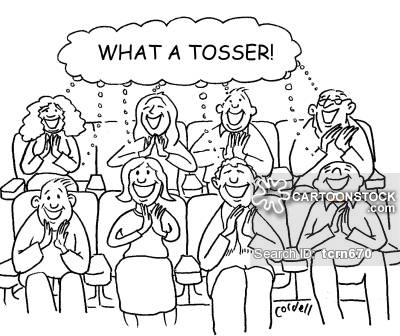
Clap clinic...

Yonks ago, I remember a poet at a performance explaining that you can classify a poem by the kind of onomatopoeia it elicits. There are “ooh” poems. There are “aah” poems. There are “oh!” poems. There are “hmmm...” poems. There are “fffff” poems. There are “ouch” poems. And occasionally there are “ha!” poems too.

Every one of these responses, in its own way, is a sign that a poem has succeeded. In some poetry readings you can gauge the impact of a poem by the volume of the wordless response from around the audience. It’s most obvious with the ‘instant impact’ poems, which tend to be in the “ooh”, “ha!” or “ouch” categories. But sometimes a particularly good poem needs an appreciative silence, to allow the impact of the words to sink in. A “hmmm” poem can become an “oh!” poem as understanding dawns on the listener. A love poem (usually an “aah”) may have a sting in the subtext, turning it into an “oh!” or even a “fffff”. Two of the First Prize poems I’ve chosen from competitions I’ve judged (Kate RhodesThe Movement of Bees and Joanna Ezekiel’s Homecoming, if you’re interested) fall very much into this category – I’ve heard Joanna perform the latter, and heard the audience making exactly those responses. And it’s one of the joys of a good poetry reading, to allow the poems space to take root in the consciousness of the audience, to allow the responses to unfurl in exactly this way.

There are many ways to show appreciation for a good poem. The evocative onomatopoeia may well be the highest compliment a poem can elicit. An appreciative (or even a shocked) silence can be another. And so can a round of applause.

But here’s the thing. A round of applause may be entirely appropriate for a “ha!" poem, or an “ouch” poem. And let’s face it, performing poets love the adulation. But what may be entirely appropriate for a “ha!” poem may be exactly the wrong response to the more subtle piece of poetry – the “hmmm” poem that needs space, and perhaps needs silence too, to sink in. There may even be a risk that a premature round of applause can shatter a carefully woven atmosphere, detract from the substance of the poem, and rob the audience of the chance to really feel what the poet is getting at.

One of my regular correspondents, poet Angela Topping, puts this bluntly. “I ask for a silence so the poem can do its work,” she blogged in August 2015. “To clap at the end of a one or two minute poem is like drinking tea from a delicate china cup, and then shattering it against the wall.”

I’m not sure I would go that far, to be honest. As the MC of a long-running open mic night, I’m well aware of the value of a good round of applause as a sign of affirmation. It’s particularly important for those who are new to writing poetry, or to performing it in public. It also matters a lot to those visiting a performance night for the first time, who may be seasoned performers but could well be strangers to the rest of the audience. The enthusiasm of an audience response can be the difference between that person coming back, and maybe becoming a regular, and them never darkening your door again.

So I was rather disconcerted when, after a visitation from the good people at Write Out Loud last year, The Speakers’ Corner came in for criticism precisely because not all audience members clapped every single poem that was performed. The majority got applause, or at least that was my impression. But for other poems, the response was more along the lines of the considered “hmmm” or the admiring “oh!”, and the poets for the most part took this as a sign of affirmation of their work just as they would have done had they been met with a round of applause. There was certainly nobody who performed that night who wasn’t roundly applauded at the end of their set, whether or not there were claps between poems.

I didn’t think this was an especially big deal. The audience at Speakers’ Corner is always supportive. We don’t boo. We don’t heckle (unless we know the performer very well, and know they won’t mind). We listen really attentively, especially when newcomers are performing. Saboteur Award winner Steve Nash gave his first public performances of poetry at Speakers’ Corner, and even gave us a word of thanks in an interview to Write Out Loud because of the quality of the welcome and the support he always found from the Speakers’ Corner audience. There have been plenty of others, through the years, who have first performed for us as nervous newcomers, and gone on to write prize winning poetry and perform at slams and spoken word shows.

Our visitors from Write Out Loud saw it differently, however. In fact, in one-to-one feedback after the event, I was told that one or two of the group had been planning to perform for us that night, but had been put off doing so precisely because they didn’t think they would be applauded. They therefore didn’t feel that their poetry would be welcome.

That stung and saddened me. I’d hate to think of anybody coming to Speakers’ Corner and feeling that their poetic offerings are not going to be appreciated (unless they are using their verse to extol the virtues of Nigel Farage, possibly). I’ve been soul-searching for the better part of a year to work out if we were doing anything wrong, and if so, how we can improve. And to be honest, I haven’t come up with any answers.

I don’t want to insist that the audience clap every poem. I’d rather have the appreciative murmur for the “hmmm” poem, the shocked silence when someone performs an especially hard-hitting piece. Should we applaud a poem about a rape? Or about the drowning of a Syrian refugee? My gut tells me that applause for the poem is not the right response (though applause for the poet, in due course, certainly would be). I want the audience to have the freedom to exercise the right not to applaud if that poem about the virtues of Nigel Farage gets an airing. But I don’t want anyone to feel that the possibility of not being applauded means a risk of them not being appreciated for sharing their creativity with us.


(Photo (c) Cartoonstock.com)

Sunday, 24 January 2016

To pay, or not to pay...

January 2016 is the tenth anniversary of The Speakers’ Corner, the poetry and spoken word open mic which I have MCed for seven of those years. Over that time we have committed ourselves to providing a platform for up-and-coming local writers, giving them a chance to perform their work on an equal status with the often award winning poets who appear monthly as our guest features. We pride ourselves on being an accessible, non elitist event – both in the types of spoken word that get shared in the open mic (ranging from the unashamedly populist to the at times breathtakingly complex) and in our policy of keeping entry fees as low as possible so that nobody is priced out of coming along.

It was with rather a heavy heart that I began 2016 with an announcement that I was doubling the entry fee for our monthly event.

Yes, that’s right. The price of admission to Speakers’ Corner has shot up to a staggering £2 per person.

This wasn’t a decision I took lightly. Speakers’ Corner has always been, and will always be (under my tenure, anyway) a grassroots arts event. Since time immemorial the door money has been fixed at a mere £1. There were good reasons for asking for that £1. Even when an event runs on goodwill, there are expenses that have to be met – the cost of publicity flyers, for instance. We have also been committed to making a payment towards our guests’ travel expenses (and to covering them in full, wherever we can).

This is really important: because Speakers’ Corner has never been able to pay its guest features a fee for coming to perform for us. So the least I can do is ensure that if guests want to share their creative work with us, they are guaranteed not to be out of pocket for doing so.

It is the increasing burden of travel expenses which has forced the 2016 price rise. That, and the habit of a small minority of participants to not pay their statutory £1. Most years, the event breaks even. In 2015, it ran at a loss – it was only the generous decision of a couple of our guests to waive their travel expenses which stopped me from having to shell out my own money to keep the event viable.

I had to take the view that this couldn’t continue. A £2 entry fee will mean we can be a little more generous in our travel expense allowances, and possibly build up reserves to invite guests from slightly further afield. Any surplus will be donated to the charities supported by York’s Arts Against Homelessness initiative – so we remain firmly not for profit, and now have a chance to give something modest back to the community too.

Nonetheless, I am distinctly uncomfortable that we are in this position in the first place. I don’t like being an event that can’t afford to pay its guest features. But such is the reality of trying to support grassroots art. We have never had Arts Council funding, or the backing of an established arts outlet – and we certainly don’t have wealthy patrons! In such circumstances we can only pay out what we take in. Long-time Soapbox followers will know how vehemently opposed I am to the idea that access to the arts should be controlled by people’s ability to pay. My principle has always been to keep Speakers’ Corner running at the lowest possible cost to its loyal punters.

There was a certain irony in reading that a literary event much bigger than mine has just got itself into hot water over the selfsame issue. Philip Pullman’s resignation as patron of Oxford Literary Festival has set tongues wagging, and rightly so. The worker deserves his wages, and creative people deserve a fair wage for the results of their creativity. But I have a certain sympathy for the Festival, which suffered a barrage of negative publicity over its failure to pay its guest authors. Like us, Oxford Literary Festival has no grant funding and no wealthy patron. It has to be self-sustaining, or it won’t function. And somewhere along the line, the Festival organisers made the decision that it was better to keep a literary event alive by presuming on the goodwill of its headliners, rather than bankrupt itself by undertaking to pay out more in fees than it was going to recoup in takings at the door.

There is, of course, a huge difference between Speakers’ Corner on the one hand, and Oxford Literary Festival on the other. We are a regional event in the back room of a pub, twelve times a year. They have been going 20 years and have over 500 events on their programme.

All of which suggests to me that Oxford Literary Festival’s fatal mistake is one of failing to cut its cloth appropriately. You simply can’t grow to a 500-plus-event festival without a stable financial base. It seems ludicrous to me that they have done so. If the only way they can afford 500-plus events is by not paying the people who are the reason for the Festival even existing, then why aren’t they doing 100 events instead, or 50? All festivals go through lean times. Even the most successful can miss out on Arts Council funding, or lose key sponsors. The correct thing to do is to retrench and plan for something bigger and better when resources allow.

There’s a certain arrogance in Oxford Literary Festival’s assumption that it can carry on as usual simply by presuming on the goodwill (or the vanity) of its authors. I hope this is a mistake we won’t make at Speakers’ Corner. I am thrilled that there are fantastic writers in the region who want to come to York to share their creative work with us, and don’t mind doing it for nothing more than a beer and the chance to sell a few books. But I know that what we do at Speakers’ Corner is only one part of what goes to make a vibrant and varied arts scene. We need the big events, the Arts Council funded ventures, the festivals that do commit themselves to paying a fair rate to those who make things happen. And they need us, too – to generate audience, enthusiasm, to showcase the stars of next year, and to keep the spoken word where it truly belongs. Among the people, from the people, and for the people.

There’s a separate debate raging off the back of the Philip Pullman issue: and it’s the one that mistakenly equates professional (in the sense of those who can command payment) with good, and amateur (in the sense of those who will work for beer) by some sort of spurious logic as rubbish. I’ve had words to say about this in previous Soapbox posts. I’m sure I will have more before the dust settles.

Tuesday, 27 October 2015

Bridport Blether, part 2: The perils of the sifting committee

The annual announcement of the Bridport Prize winners always generates a bit of controversy. This year’s judge, Roger McGough, certainly didn’t mince words in his judge’s report. He talked about “feelings of déjà-vu” as he read the 200 poems culled from 7,000-odd entrants to make up the 2015 longlist, and of “emotional overload”. Reading many of the poems, he said, “seemed like an intrusion into a very private grief”. And what was missing, according to McGough? Rhyme, for one, was so scarce that McGough confessed to be “gasping for a villanelle or the whiff of a sestina.” Moreover, the few rhyming poems that did make it into his postbag “offered more in style than content.”

Many poets will also be intrigued by McGough’s lament at how little anger there was in this year’s longlist. “Where was the rage?” he demanded, adding more sarcastically: “our politicians can sleep soundly in their beds, the poets are not assembling in the street outside.”

So what on earth went wrong?

Well as far as the winning and commended poems were concerned, nothing at all. McGough was generous in his praise for these poems and their writers (and I echo his praise, I’ve been a fan of third-prize winner Julia Deakin for some years). But something seems to have gone badly awry somewhere between the submission process and the choosing of the longlist. McGough blamed himself, to a certain extent, noting that his early encouragement to produce “poems that I wish I had written” may have resulted in a glut of poets trying to write in the style of McGough, rather than in their own unique voices and styles. But surely this can only be part of the story?

I don’t believe for a minute that poets are not writing angry poems. My recent blog on political poetry remarked on just how enraged arts practitioners up and down the country are at some of the things done in our name (or not done) by governments and vested interests purporting to act for the benefit of the nation. Nor am I persuaded that poets aren’t working in rhyming verse forms; at open mics, and occasionally at writing workshops, I’m always coming across examples of original, often brilliantly witty rhyme. So I’m sceptical that there were no examples at all in the Bridport postbag.

More likely, the poems arrived, but someone stopped them from ending up in the longlist that was passed to the guest judge.

Roger McGough wasn’t the only person judging the Bridport Prize. Between the arrival of the 7,000-odd entries and the finalising of the 200-strong longlist, a whole committee of ‘sifters’ were at work deciding which poems would get through to McGough, and which wouldn’t. If certain types of poems were conspicuous by their absence from the longlist, it seems to me that the logical explanation for this is that the sifting committee decided they didn’t want those poems in the longlist.

Of course, I have no proof that this is what happened. But my suspicions seem to be borne out by McGough’s own account of what he was told by the head of the sifting committee, one Candy Neubert, who reportedly felt that the standard of submissions this year was “disappointingly low”.

This doesn’t necessarily mean the excluded poems weren’t any good. Poetry, after all, is notoriously subjective, and what works for one reader may be a turn-off for another. Was the competition strengthened or weakened by their exclusion? Probably we’ll never know.

Sifting committees are common practice in the bigger competitions. And it’s easy to see why. 7,000-plus entries take time and emotional energy to read. And big-name judges are unlikely to do the work for minimum wage. Even a competition with the resources of Bridport would soon bankrupt itself if it expected the guest judge to consider every entry. And there’s the logistical issue that 90% of those entries will arrive in the last two weeks before the closing date. With a finite window of time until the planned announcement of the winners, reliance on a sole judge can mean some very late nights for the judge – and serious uncertainty for the competition organisers if the judge has to deal with unforeseen problems. A bout of ’flu at the wrong time could mean a missed deadline, a delayed announcement, and considerable expense and embarrassment for the organisers.

The competitions I’ve judged in the past have never had postbags bigger than a couple of hundred poems (and a similar number of short stories, in one case). Even so, the first time I was a judge I quickly discovered that it took considerable forward planning to create the time and space to give each entry the attention it really deserved. The decision as to which of the shortlisted pieces actually got the prizes sometimes had to go down to the wire. And that’s when there are just a couple of hundred pieces of writing. Carole Bromley, who has been sole judge of the YorkMix/York Literature Festival Poetry Competition since its inception (and was on the Bridport shortlist herself this year), had the herculean task of judging 1,736 poems in the space of about 4 weeks earlier in the year. She tells me that this was no easy task.

So perhaps sifting committees are a necessary evil. But in the larger competitions, they surely only add to the nagging sensation that there’s an element of the lottery about whether or not your poem gets picked. I mean no disrespect to the winners. It takes huge skill to craft a Bridport Prize-winning poem – I would never dispute that for an instant. But one wonders how many potentially Bridport Prize-winning poems never make it as far as the guest judge because someone in a sifting committee has already decided that they’re not quite the right thing this year?