

.JPG)
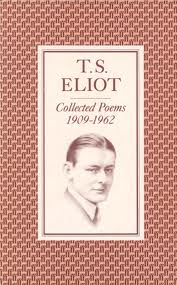
I'm not convinced that performance poet Tim Ellis will thank me for name-checking him at the start of a blog post headed "Pretentious Poets." But it's thanks to him that I'm writing this post. Tim and I have different poetic backgrounds and interests, which has made for some lively online debates in the past couple of years. While we often disagree about specifics, we mostly keep a healthy respect for the other's point of view.
But I cannot, ever, agree with Tim that the work of TS Eliot deserves to be consigned to the poetic dustbin.
I should add that Tim is one of the least pretentious poets I've ever met. As a writer he's a genius of rhyme and rhythm; as a performer, he was a worthy winner of the 2011 York Poetry Slam, for which I was part of the judging panel.
As I understand it, Tim's take on TS Eliot is this. TS Eliot is a pretentious poet. Much of his work is so thick with obscure allusions to ancient Greek and Roman civilisation that it's impossible to find a way into it unless you have a higher degree in classical literature. And, surely, any poetry that is this hard to understand just adds fuel to the argument that poetry is something that's disconnected from reality, and simply not worth bothering with.
I have a lot of sympathy with this argument – and it's one that has made me think about why I first started writing poetry. I came to poetry relatively late in life, following teenage years filling bookshelves full of ring binders with really bad novels of epic proportion. My poems started life as stories that I was trying to tell: some to fathom out the problems of the world or the complexities of the people around me; others, simply to capture the mood on one particular day or in one special place. "Art", for its own sake, was practically non-existent in my list of priorities.
Accessibility is always really important if you're trying to tell a story. And it's the same with my poetry. If people don't get what my poems are going on about, then on some level the poem hasn't worked.
The trouble is, other poets don't write for the same reasons that I do. There are many who write for no other reason than the joy of artistic expression. They don't necessarily need an audience; and when they get one, it may not matter if not everyone in the audience can understand what they're going on about.
Which brings me back to TS Eliot. His approach to poetry was in many ways the polar opposite of mine. Yet, when I blogged awhile back about "The Ten Poems that Changed my Life", The Waste Land was one of the poems I listed.
There is something magical for me about this poem. Eliot's ability to draw scenes and atmospheres, to get deep into the guts of his characters' (and his readers') dreams and fears, and the sheer musicality of his free verse – all these things weave a sort of spell about me. It doesn't matter that three-quarters of the classical allusions go straight over my head. Somehow The Waste Land bypasses my head and echoes inside my gut in a way that few poems have ever done.
Four Quartets, by contrast, leaves me cold. The layers of classical and artistic reference are so thick here that to me they're completely impenetrable. There's nothing I can latch on to or identify with. The atmospheric quality of The Waste Land is missing, the rhythm and musicality of the words seem to be lacking too. Its philosophising is abstract, self-indulgent. It makes no connection with me and sheds no light whatsoever on the world around me.
There seem to me to be a lot of poets who have been encouraged to write in a way reminiscent of what Eliot does in Four Quartets. The end result is to daze the reader with intellect. This can be done very cleverly; even though I don’t understand the end result of Four Quartets, I can at least tell that there's a master craftsman at work. Mostly, though, it just seems insufferably smug.
If there is a huge intellectual hurdle to be overcome before you can appreciate poetry, to me it is not good poetry, no matter how many awards it wins. Outside the rarefied atmosphere of literary circles, the misconception that 'serious' poetry is something too snobbish for the average man or woman in the street is still one that's all too common. And any poet dead set on propagating that misconception is going straight into my personal rejection bin. They're not telling a story. They're not even enchanting their readers with a glimpse of a dream. To put it bluntly, all they are doing is showing off how clever they are.
I'm really, really proud that there so many good poets on the Yorkshire scene who show that it is possible to be serious about your poetry without it becoming pretentious. The poetry world doesn't need another TS Eliot; one is quite enough, thank you very much. If a few regulars in the learned poetry journals could learn to be a bit less TS Eliot and a bit more Tim Ellis, they'd be doing all of us a favour.
